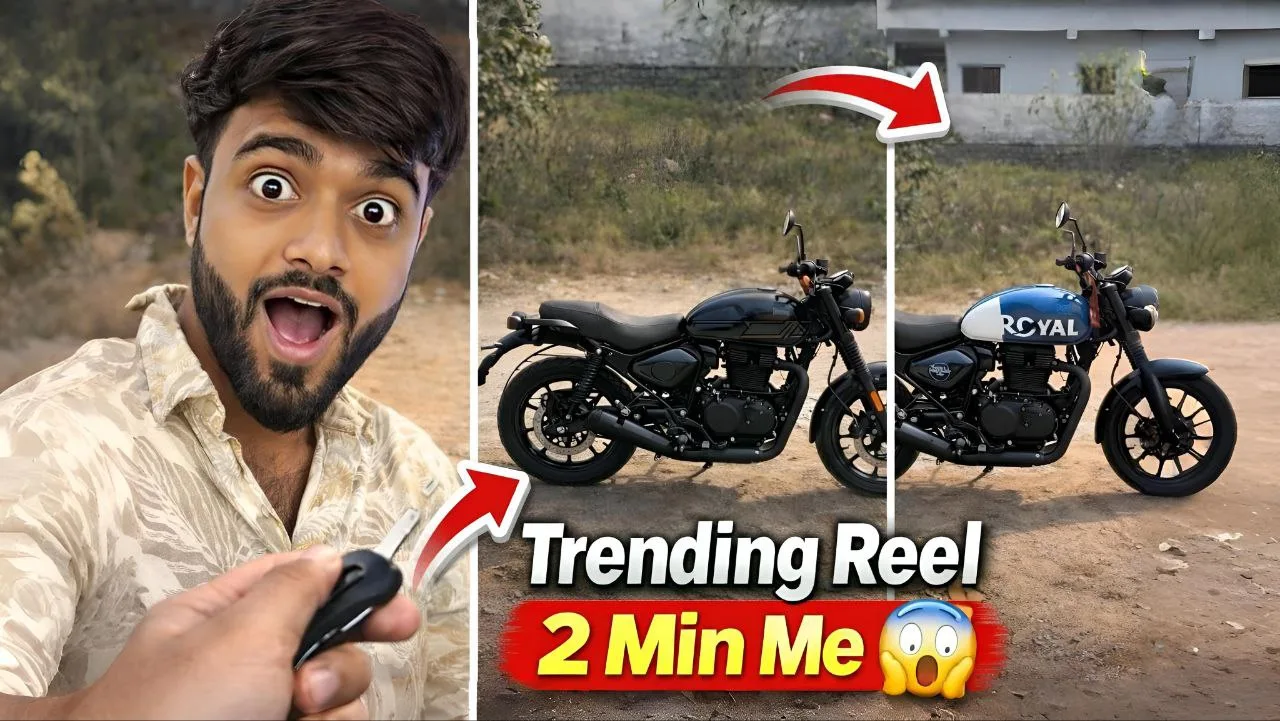
Use the first frame as the exact starting reference, where a key is thrown onto the ground and lands naturally with realistic physics.

As soon as the key hits the ground, it materializes into full-scale vehicle components — not tiny fragments.

The transformation happens one part at a time, in a logical mechanical sequence:

Chassis forms first

Engine and mechanical core assemble next

Suspension and wheels lock into place

Body panels, fuel tank, and outer structure attach last

Each vehicle part should appear at realistic size, move naturally, and physically connect to the previous part — no floating, no teleporting.

Use the second frame as the exact ending reference, showing the fully assembled, complete vehicle in final form.

Maintain the exact same camera angle, framing, background, and subject position throughout the entire sequence.

Add subtle dust, ground contact effects, and cinematic motion only where parts touch the ground or lock together.

Ensure consistent realistic lighting, reflections, and shadows that match the environment from start to end.

Avoid glitches, flickering, warping, stretching, micro-shards, liquid morphing, or magical particle effects.

The final result should be ultra-realistic, cinematic, smooth, and mechanically believable, like a real high-end vehicle assembly filmed in slow motion.